


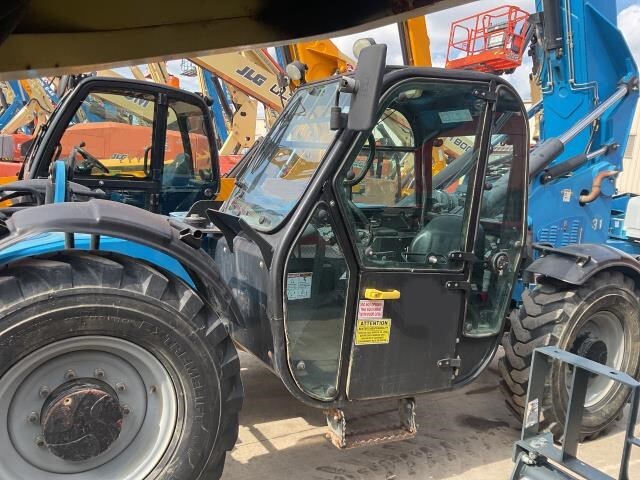


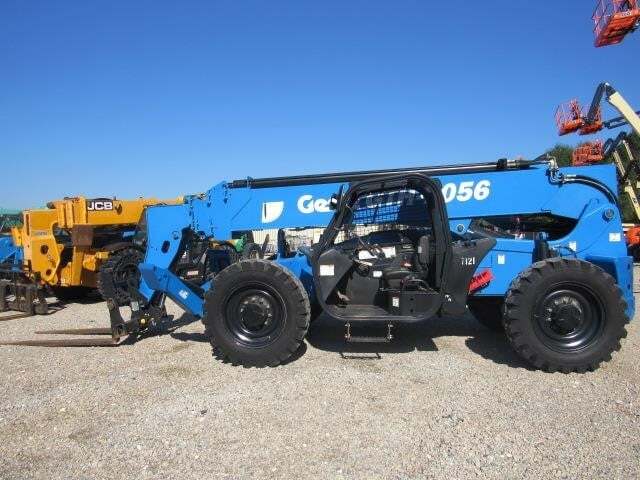


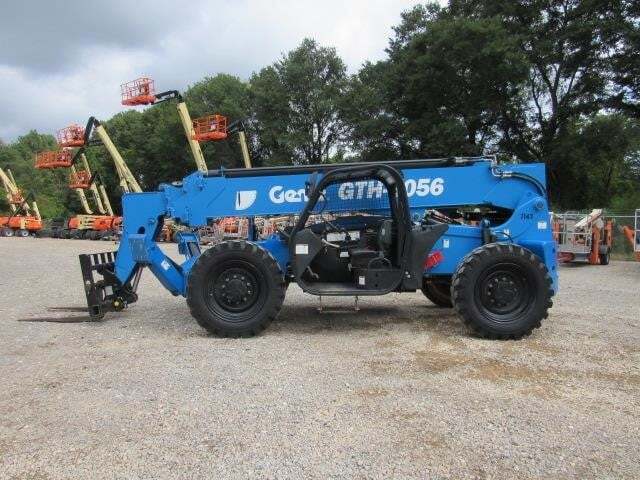
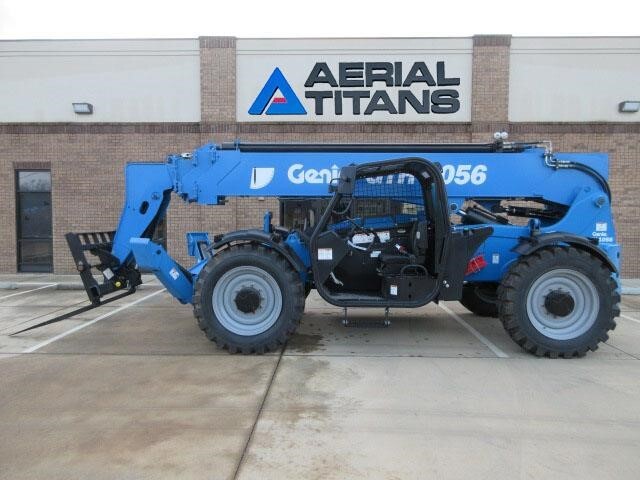

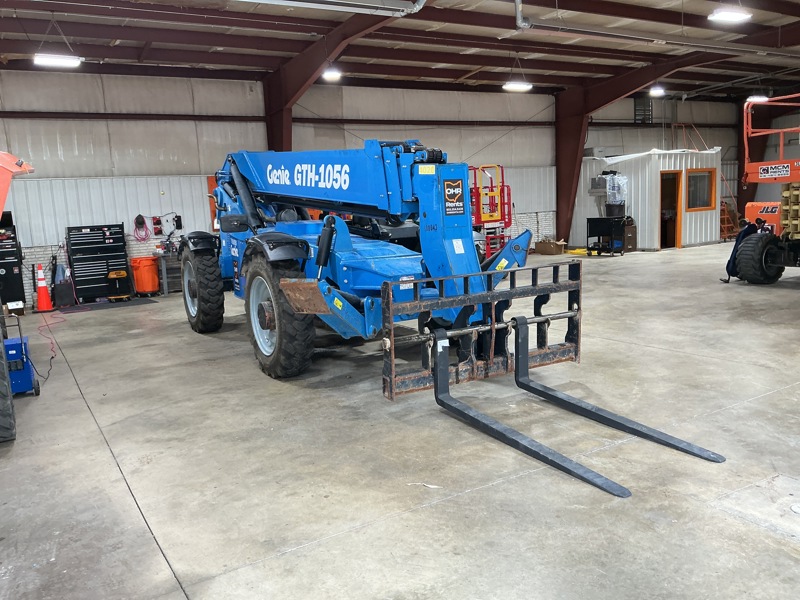


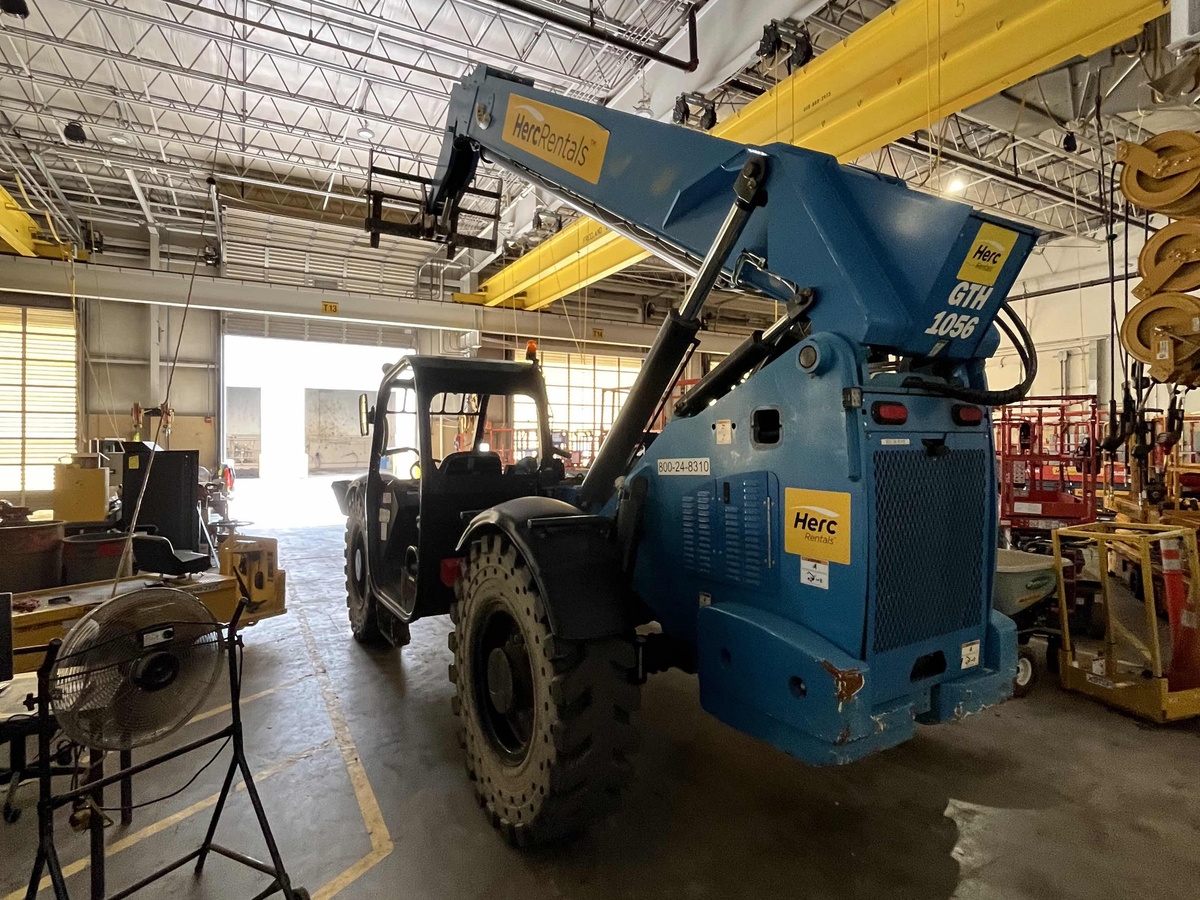




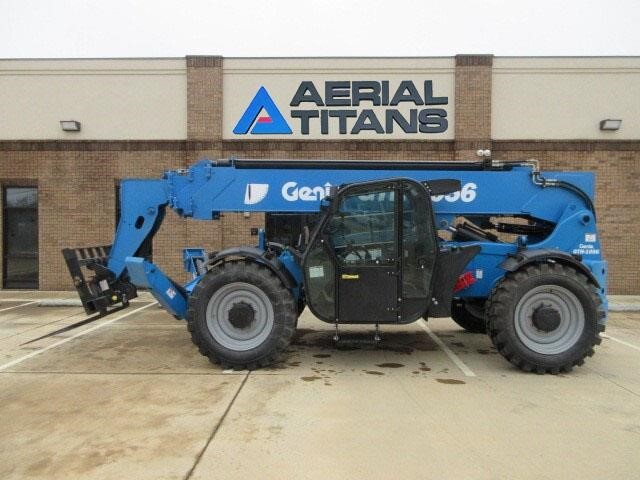



Genie GTH-1056 Telehandler Overview
The Genie GTH-1056 is a high-capacity telehandler that lifts up to 10,000 lb, reaches 56 ft 7 in high and extends 42 ft forward. It still carries 5,000 lb at full height, so contractors use it to set trusses, place roofing and masonry materials, and unload trucks on multistory jobs. It sits between the Genie GTH-844 and the taller Genie GTH-1256, and it competes with the JLG 1055 and the SkyTrak 10054.
Genie GTH-1056 Key Features
- High capacity at height: 10,000 lb maximum and 5,000 lb at the full 56 ft 7 in lift height.
- Three steering modes: 2-wheel, 4-wheel coordinated and crab steering, with a 14 ft outside turning radius for tight job sites.
- Frame leveling: up to 10 degrees side to side to level the machine on uneven ground before lifting.
- Quick-Attach system: Genie’s Quick-Attach carriage and 15 GPM auxiliary hydraulics run pallet forks, cubing tines, lumber forks, side-tilt carriages and a swing carriage.
- Rough-terrain drive: full-time 4WD with limited-slip axles and foam-filled tires as standard.
- Cab choices: an open ROPS/FOPS cab comes standard, and an enclosed cab with heat and A/C is optional, so check which one a used unit has.

Genie GTH-1056 Specs
Lift and Reach
Engine and Drive
Size and Cab
Specs are from Genie’s current GTH-1056 spec sheet. Travel speed is 15 mph with the 74 hp engine and 18 mph with the 121 hp engine. Older model years can differ, especially the engine, so check the serial plate and the load chart in the cab on any used unit.
Buying a Used Genie GTH-1056
- Check the hour meter against the service records, and confirm the engine on the serial plate.
- Look for hydraulic leaks at the boom, lift, tilt and steering cylinders, hoses and control valve.
- Extend and retract the boom fully and listen for chatter; check the boom wear pads for uneven wear.
- Test all three steering modes and the frame leveling, and confirm the 4WD engages.
- Make sure the load chart is in the cab and readable, and that the load stability indicator works.
- Inspect the tires, the Quick-Attach pins and the fork carriage for cracks or bent parts.
- Ask for recent inspection records, or document your own with the FleetNow Inspect app.
Compare listings above with other used Genie telehandlers and all used telehandlers on FleetNow. Need help finding the right unit? Contact the equipment experts at FleetNow or call 1-216-973-5124. Selling a GTH-1056? List your equipment on FleetNow.
Genie GTH-1056 Troubleshooting
Most GTH-1056 problems trace back to a few common causes. Start with these checks, and use the Genie operator and service manuals for your serial number. Leave repairs to a qualified technician.
1. Engine Starting Issues:
- Make sure the tank has enough clean diesel.
- Check the battery charge and make sure all electrical connections are clean and tight.
- Verify that the emergency stop is not engaged.
2. Hydraulic Problems:
- If the boom or attachments are slow or do not respond, check the hydraulic fluid level and top it up if needed.
- Look for hydraulic fluid leaks, which can point to damaged hoses or fittings.
3. Overheating:
- Clean debris from the radiator and cooler cores, which clog quickly on dusty sites.
- Check the coolant level, fan, water pump and thermostat.
4. Fault Codes or Alarms:
- Note any fault codes or alarms on the display and look them up in the operator’s manual.
- Fix the issue the code points to before returning the machine to work.
5. Steering Problems:
- If steering is hard or the machine does not respond, check the hydraulic fluid level and inspect the steering components for damage.
- If the wheels are out of line after changing steering modes, realign them following the operator’s manual.
6. Safety Interlocks:
- Make sure the operator is seated with the seat belt fastened. On units with a seat switch, an empty seat can disable drive and boom functions.
- A faulty interlock switch can keep the machine from operating.
7. Attachment Issues:
- If an attachment will not lock or operate, inspect the Quick-Attach pins and mounting for damage or misalignment.
- Confirm the attachment is fully locked to the Quick-Attach before lifting.
Recent Equipment News
MEC MME25 Review: Specs, Features & Industry Perspective
MEC MME25 Review: Specs, Features & Industry [...]

Construction Equipment Trends 2025: Inside Q1–Q2 Demand & What It Means for You
Table of Contents Top 10 Categories Q1 vs [...]

Pettibone AS1932E Review: Specs, Price, Pros & Cons
Pettibone AS1932E Review: Specs, Price, Pros & Cons [...]