

Vertical Mast Lifts: Models, Specs and Buying Guide
Last updated: October 2026
A vertical mast lift is a compact, battery-powered aerial work platform that raises one worker straight up on a telescoping mast. Most models are about 30 inches wide, weigh 1,700 to 3,300 lb and reach 12 to 25 ft of platform height (18 to 31 ft working height), so they roll through standard doorways, fit in many freight elevators and work in aisles where a scissor lift won’t fit.
This guide covers how vertical mast lifts work, the current models from Genie, JLG, Skyjack, Haulotte and MEC, how they compare to scissor lifts, what they cost new and used, and what to check before you buy one.
In this guide:
What Is a Vertical Mast Lift
A vertical mast lift (also called a personnel lift, mast lift or, in Genie’s lineup, a Runabout) is a self-propelled aerial work platform built around a single telescoping mast. The platform carries one worker and a small amount of tools or material, and the operator drives and steers from the platform, even at full height on most models.
Under ANSI A92.20, vertical mast lifts are Group A machines, which means the platform stays inside the machine’s tipping lines as it rises. Driveable models that are steered from the platform while raised are Type 3, the same class as slab scissor lifts.
Standard vertical mast lifts reach 11 to 25 ft of platform height. A few models add a jib that swings the platform up and over shelving or equipment, such as the Genie GR-26J and the JLG Toucan 26E, which reach about 26 ft of platform height with 8 to 9 ft of outreach.

How Vertical Mast Lifts Work
A set of nested mast sections extends with a hydraulic cylinder powered by a 24-volt battery pack. Most masts use chains or cables and sheaves to raise the sections in sequence. Skyjack’s current SJ12 E, SJ16 E and SJ20 E use a multi-stage cylinder instead, which removes the mast chains, cables and sheaves.
Common features on current models include:
- Drive at full height: most models drive at about 0.5 mph when raised and about 2.5 mph when stowed.
- Pothole guards: guards drop below the chassis as the platform rises. If they don’t deploy, drive and lift are disabled.
- Tilt alarm and load sense: the machine stops lifting or driving if it is on too steep a slope or the platform is overloaded.
- Roll-out deck: many models have a platform extension that slides out about 16 in, usually rated for 250 lb.
- Emergency lowering: a manual lowering valve brings the platform down if power or controls fail.
- Non-marking tires: standard on indoor models to protect finished floors.
Vertical Mast Lift Models and Specs
The table below lists the current vertical mast lifts sold in North America. Heights are the maximum indoor ratings; models rated for outdoor use often have a lower outdoor height. Specs are from manufacturer spec sheets.
| Model | Platform height | Working height | Capacity | Stowed width | Weight |
|---|---|---|---|---|---|
| Genie GR-12 (guide) | 11 ft 4 in | 17 ft 4 in | 500 lb | 29.5 in | 1,681 lb |
| Genie GR-15 | 14 ft 8 in | 20 ft 8 in | 500 lb | 29.5 in | 2,178 lb |
| Genie GR-20 | 19 ft 9 in | 25 ft 9 in | 350 lb | 31.5 in | 2,513 lb |
| Genie GR-26J (jib) | 25 ft 11 in | 31 ft 11 in | 500 lb | 44.8 in | 6,250 lb |
| JLG 1230ES (guide) | 12 ft | 18 ft | 500 lb | 30 in | 1,740 lb |
| JLG E18MCL | 18 ft | 24 ft | 400 lb | 30 in | 1,950 lb |
| JLG Toucan 26E (jib) | 26 ft 6 in | Not published | 500 lb | 39 in | 6,900 lb |
| Skyjack SJ12 E | 12 ft | 18 ft | 500 lb | 30.5 in | 2,012 lb |
| Skyjack SJ16 E | 15 ft 6 in | 21 ft 6 in | 500 lb | 30.5 in | 2,054 lb |
| Skyjack SJ20 E | 19 ft 6 in | 25 ft 6 in | 350 lb | 31.5 in | 2,440 lb |
| Haulotte Star 13 | 12 ft 6 in | 18 ft 6 in | 500 lb | 31 in | 2,006 lb |
| Haulotte Star 20 | 19 ft 8 in | 25 ft 8 in | 440 lb | 31 in | 2,580 lb |
| MEC MMAE16 | 16 ft | 22 ft | 500 lb | 30 in | 2,170 lb |
| MEC MME20 | 20 ft | 26 ft | 350 lb | 31.5 in | 2,740 lb |
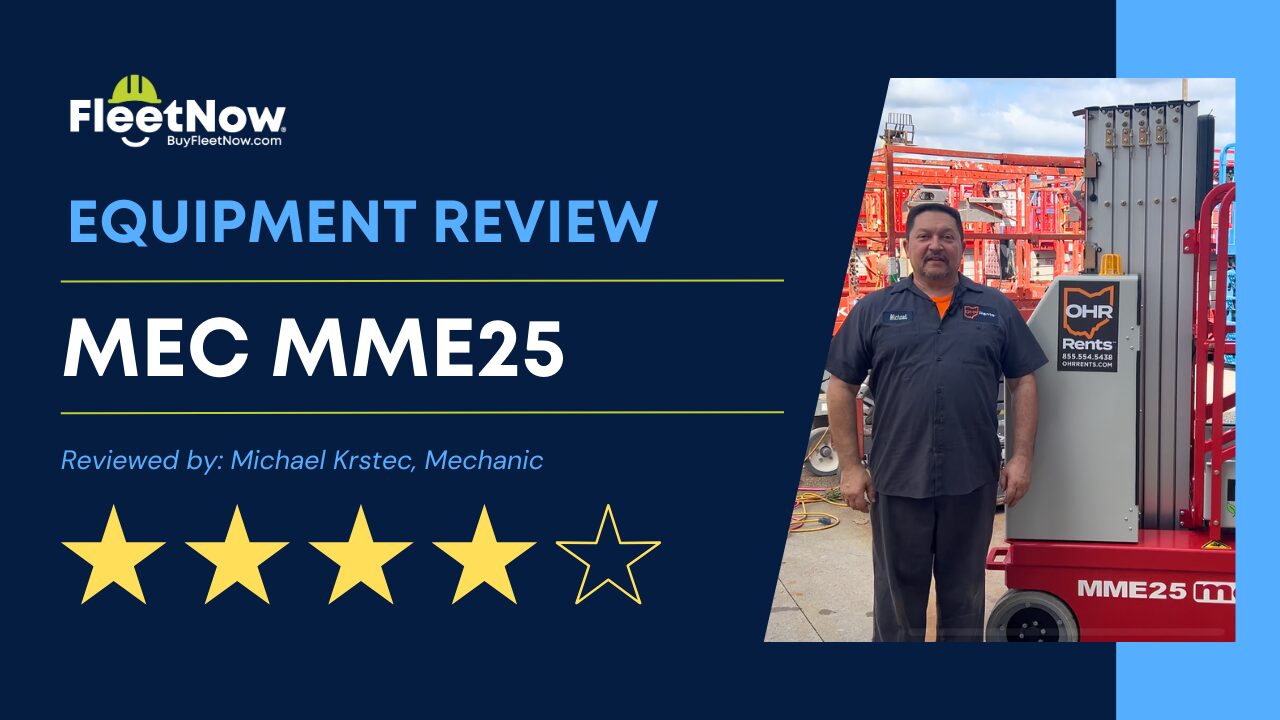
| MEC MME25 (guide) | 25 ft | 31 ft | 350 lb | 31.5 in | 3,310 lb |
A few other models are worth knowing when you shop used:
- Genie QS-12, QS-15 and QS-20 (QuickStock): indoor-only versions of the GR series with a stock tray for order picking.
- Genie GRC-12: a 12 ft contractor model, now rated for indoor use only.
- JLG 15MSP, 20MSP and 20MVL: discontinued models that JLG replaced with the E18MCL and E18MML. Used JLG 20MVL units are common and inexpensive.
- Skyjack SJ12 and SJ16 (before the E series): earlier chain-mast versions that are widely available used.
- Larger jib models: the JLG Toucan 32E (32 ft 3 in platform height), Haulotte Star 26 J and MEC MME30-RJ reach about 26 to 32 ft with a rotating jib.
Browse used units by brand: JLG vertical mast lifts, Skyjack vertical mast lifts and Genie Runabouts.
Vertical Mast Lift vs Scissor Lift
Vertical mast lifts and slab scissor lifts cover similar heights, but they suit different jobs. A scissor lift gives you a bigger platform and more capacity. A vertical mast lift is lighter and narrower, and the platform sits off the front of the machine so you can work closer to shelving, walls and equipment.
| Feature | Vertical mast lift | 19 ft slab scissor lift |
|---|---|---|
| Platform height | 11 to 25 ft | 19 ft |
| Platform size | About 2 x 2.5 ft (one worker) | About 2.5 x 6 ft plus extension deck |
| Capacity | 350 to 500 lb | About 500 lb |
| Occupants | Usually 1 | Usually 2 indoors |
| Stowed width | 29.5 to 31.5 in | 30 to 32 in |
| Machine weight | 1,700 to 3,300 lb | About 2,500 to 3,400 lb |
| Reach over obstacles | Platform overhangs the front; jib models reach up and over | Limited to the extension deck |
| Best for | Single-person maintenance, stocking and tight aisles | Two-person work, more material, larger areas |
If you need two workers or a lot of material on the platform, a slab scissor lift is the better fit. For one-person jobs in tight spaces, a vertical mast lift is usually faster to move and set up. Our scissor lift types guide covers the scissor side in more detail.
Common Uses
Vertical mast lifts are built for indoor work on flat, finished floors. Common jobs include:
- Warehousing and stock picking: pulling cartons from upper shelves, especially with stock-picker models such as the Genie QS series, JLG E18MML and Haulotte Star 13 Picking.
- Retail stores: restocking, signage, displays and overnight resets in narrow aisles.
- Facility maintenance: changing lights and ceiling tiles, and servicing HVAC, sprinklers and cameras.
- Electrical and low-voltage work: running cable through ceilings and cable trays.
- Interior construction: drywall, ceiling grid, painting and finish work in fit-outs.
- Schools, hospitals, offices and data centers: work in occupied buildings where a machine has to fit through doors and elevators and leave floors unmarked.
Pros and Cons
Pros
- Narrow and light enough for standard doorways, many freight elevators and most finished floors
- Drives at full height, so one worker can reposition without coming down
- Platform overhangs the front of the machine for closer access to shelves and walls
- Battery powered, quiet and emission free for indoor use
- Low used prices: many units sell for $4,000 to $8,000
Cons
- Small platform that usually carries one worker
- Lower capacity than a scissor lift, often 350 lb on 20 ft models
- Limited or no outdoor rating on many models
- Needs flat, firm floors; not suited to rough or sloped ground
- Mast chains, cables and wear pads need regular inspection
Vertical Mast Lift Prices
Used vertical mast lifts are among the most affordable aerial work platforms. Standard 12 to 20 ft models usually sell for $4,000 to $8,000, while late-model units and jib models cost much more. New standard models generally run about $18,000 to $31,000, depending on brand, height and whether you pay list or dealer street price.
| Model | FleetNow used asking prices | Middle half of listings | New price |
|---|---|---|---|
| Genie GR-12 | $2,700 to $6,800 | $3,800 to $6,000 | Dealer quote |
| Genie GR-15 | $4,900 to $16,950 | $6,200 to $8,000 | About $18,250 (dealer) |
| Genie GR-20 | $2,813 to $8,600 | $5,100 to $7,800 | About $18,550 (dealer) |
| Genie GR-26J | $13,200 to $19,999 | $16,900 to $19,999 (7 listings) | Dealer quote |
| JLG 1230ES | $3,100 to $5,800 | $4,000 to $4,900 | Dealer quote |
| JLG 20MVL | $4,700 to $8,300 | $5,600 to $6,800 | Discontinued |
| JLG E18MCL | No current listings | No current listings | About $19,950 (dealer) |
| JLG Toucan 26E | $31,850 to $54,850 | 4 listings | Dealer quote |
| Skyjack SJ12 / SJ12 E | $2,166 to $10,290 | $3,600 to $5,600 | $22,790 (SJ12 E list) |
| Skyjack SJ16 / SJ16 E | $2,190 to $10,290 | $4,490 to $10,290 | $24,945 (SJ16 E list) |
| Skyjack SJ20 E | $13,900 to $14,900 | 2023 and 2024 units | $30,990 list; about $17,000 to $18,000 from dealers |
| Haulotte Star 20 | $4,700 to $8,900 | 5 listings | Dealer quote |
| MEC MME20 | $13,900 | 8 listings | Dealer quote |
| MEC MME25 | $19,000 to $19,950 | Late-model units | About $19,850 (dealer) |
Used prices are FleetNow asking prices from up to the first 40 listings on each model page in October 2026. Skyjack list prices are from Skyjack’s 2026 price guide for standard configurations; dealer prices are advertised prices for new 2026 units. Prices change often, so check current vertical mast lift listings for today’s numbers.
What drives the price of a used unit:
- Age and model generation: newer units with load sense and current ANSI A92.20 guardrails sell for more.
- Battery condition: replacing a worn battery pack can cost several hundred dollars or more, so weak batteries lower the price.
- Height and jib: 20 ft and jib models cost more than 12 to 15 ft models.
- Hours and service history: low hours, clean inspection records and a recent annual inspection support a higher price.
What to Check Before Buying a Used Vertical Mast Lift
Vertical mast lifts are simple machines, but a few items decide whether a used unit is a good buy. Check these before you commit, or have the seller send photos and videos of each one:
- Batteries and charger: ask the battery age, check for corrosion and low electrolyte on flooded batteries, and confirm the machine holds a charge through a full lift-and-drive test.
- Mast: raise the platform to full height and watch for jerky movement, noise or sections that hesitate. Look for bent sections, worn wear pads and stretched or dry chains and cables.
- Hydraulics: check the lift cylinder, hoses and fittings for leaks, and make sure the platform holds height without drifting down.
- Safety systems: confirm the pothole guards deploy, the tilt alarm works, the load sense (if equipped) is calibrated and the emergency lowering valve brings the platform down.
- Controls and drive: test drive, steering and brakes both stowed and raised, and check the platform controller and emergency stop.
- Tires and chassis: look for chunked or flat-spotted tires and damage to the base, covers and pothole guard linkage.
- Platform: check the guardrails, gate, extension deck and decals, and make sure the manual is in the storage box.
- Records: ask for the last annual inspection, service records and the serial number so you can check for open manufacturer safety bulletins.
The FleetNow Inspect app gives you a checklist to document a machine’s condition. For more on battery and electrical problems, see our guide to common electric scissor lift problems, which apply to most battery-powered lifts.
Safety and Training
Vertical mast lifts fall under the ANSI A92.22 and A92.24 standards for safe use and training. Before anyone operates one:
- The operator needs MEWP training that covers this type of machine, plus familiarization on the specific model.
- Read the operator’s manual and do a pre-start inspection at the start of each shift.
- Have a written rescue plan for getting a worker down if the machine fails at height.
- Follow the indoor and outdoor ratings on the platform decal. Many models are indoor only or carry fewer people and less height outdoors, and outdoor-rated models should not be raised in winds above 28 mph.
Manufacturers such as Genie state that the guardrail system is the fall protection on their vertical mast lifts and provide a lanyard anchor for jobsites that require one. Many employers and sites still require a harness and short restraint lanyard, so follow your site rules.
Shop Vertical Mast Lifts With FleetNow
FleetNow lists used vertical mast lifts from rental companies, dealers and contractors across the country. Start with used vertical mast lifts or Runabouts, or shop by brand: Genie, JLG, Skyjack, Haulotte and MEC. If you need a larger platform, compare scissor lifts.
Have questions about a listing? Contact our team or call 1-216-973-5124. Selling a lift? List your equipment on FleetNow.
Vertical Mast Lift FAQs
A vertical mast lift raises a small one-person platform on a telescoping mast, while a scissor lift raises a larger platform on crossed scissor arms. Vertical mast lifts are lighter and fit tighter spaces, and their platform sits off the front of the machine for closer access. Scissor lifts carry two workers and more material.
Standard models reach 11 to 25 ft of platform height, or about 17 to 31 ft of working height. Jib models such as the Genie GR-26J and JLG Toucan 26E reach about 26 ft of platform height, and the JLG Toucan 32E reaches 32 ft 3 in.
Most standard vertical mast lifts are 29.5 to 31.5 in wide and 62 to 79 in tall when stowed, so they roll through a standard 36 in door with the door fully open. Always measure the clear opening, and check the machine weight against the floor and elevator capacity before moving it between floors.
Some can. Models such as the Genie GR series, Skyjack SJ12 E and Haulotte Star 13 have an outdoor rating, usually with a lower height or fewer occupants outdoors, and should not be raised in winds above 28 mph. Many others, including the Genie QS series, JLG E18MML and Haulotte Star 20, are rated for indoor use only.
Manufacturers such as Genie say the guardrails are the fall protection on their vertical mast lifts, and they provide an anchor point for sites that require a harness. Many employers and jobsites require a harness with a short restraint lanyard, so follow your site rules and the operator manual.
Most used 12 to 20 ft models, such as the Genie GR-12 and GR-20, JLG 1230ES and Skyjack SJ12 and SJ16, sell for about $4,000 to $8,000 on FleetNow. Late-model units and jib models cost more, from about $14,000 to over $30,000. See current used vertical mast lift listings.
There is no single cutoff. Battery-powered vertical mast lifts usually show far fewer hours than engine-powered machines, so condition tells you more than the hour meter. Focus on battery health, smooth mast operation, working safety systems and inspection and service records.
Runabout is the Genie name for its GR series of vertical mast lifts, including the GR-12, GR-15 and GR-20. Many sellers and rental companies use the term for any small, driveable vertical mast lift. You can browse used Genie Runabouts on FleetNow.