


Scissor Lift FAQs: Heights, Safety Rules, Training and Prices
Last updated: October 2026
Scissor lifts are the most common aerial work platforms on job sites and in rental fleets. This page answers the questions buyers and operators ask most, from how high scissor lifts go and whether you need a harness to training rules, battery life and used prices.
Quick answers:
| Question | Short answer |
|---|---|
| How high do scissor lifts go? | 19 ft and 26 ft platforms are most common; large rough terrain models reach about 53 ft |
| How much can they carry? | About 500 to 550 lb on a 19 ft lift, up to 1,500 lb or more on large rough terrain models |
| Do you need a harness? | Not under OSHA when guardrails are in place, unless the manufacturer or job site requires one |
| Do you need certification? | No license, but OSHA and ANSI A92.24 require documented operator training |
| Can you use one outside? | Yes if it is outdoor-rated (often up to 28 mph wind) and on firm, level ground |
| How much does a used one cost? | About $3,300 to $15,850 for a used 19 ft electric scissor on FleetNow |
Jump to a topic:
Scissor Lift Basics
Scissor lifts raise a platform straight up, which makes them ideal for work directly overhead: ceilings, lighting, HVAC, drywall and shelving. Here are answers to the most common questions about how they work, how high they go and how much they carry.
A scissor lift is a mobile elevating work platform (MEWP) that raises a platform straight up on a stack of crisscrossing steel supports. It moves workers, tools and materials vertically, not out to the side, which makes it a stable, roomy alternative to ladders and scaffolding.
The main types are electric slab scissor lifts for smooth indoor floors, micro scissor lifts for very tight spaces, and rough terrain scissor lifts with diesel or electric power, 4WD and outriggers for outdoor job sites. See our guide to scissor lift types.
The most common sizes have 19 ft and 26 ft platform heights. Electric slab scissors reach up to about 45 ft, and large rough terrain models reach about 53 ft, such as the Genie GS-5390 RT.
Platform height is how high the floor of the platform rises. Working height adds about 6 ft for a person standing on the platform and reaching up. A scissor lift with a 19 ft platform height has a working height of about 25 ft.
Most 19 ft electric scissors are rated for 500 to 550 lb, and wider slab models carry about 700 to 1,000 lb. Large rough terrain scissors carry 1,500 lb or more, and some big-deck models are rated for over 2,000 lb. The rating includes people, tools and materials, and some machines have a lower limit on the extension deck or outdoors.
A 19 ft electric scissor lift weighs about 2,600 to 3,300 lb, and a 26 ft model weighs about 4,000 lb or more. A 53 ft rough terrain scissor like the Genie GS-5390 RT weighs about 16,600 lb. Check floor load limits before using a lift on elevated floors or mezzanines.
Scissor Lift Safety, Rules and Training
The main scissor lift hazards are falls, tip-overs and crushing, so training and following the operator manual matter. Here is what OSHA and the ANSI A92 standards require, plus common safety questions.
Usually not. OSHA treats scissor lifts as mobile scaffolds, and their guardrails are the fall protection, so OSHA does not require tie-off when the guardrails are in place and properly maintained. Some employers, job sites and manufacturers still require a harness and lanyard attached to the designated anchor points, so always follow the operator manual and site rules.
There is no government license, but OSHA requires operators to be trained, and the ANSI A92.24 standard requires theory and hands-on training, familiarization with the specific model and proof of training such as an operator card. Employers are responsible for making sure operators are trained.
OSHA covers scissor lifts under its scaffold rules, including 29 CFR 1926.451 and the mobile scaffold rules in 1926.452(w). The ANSI A92 standards that took effect in 2020 cover design (A92.20), safe use (A92.22) and training (A92.24) for MEWPs, including scissor lifts.
Only if the machine is rated for outdoor use. Many electric slab scissors are rated for winds up to 28 mph on firm, level surfaces, while some are indoor-only or have a lower height limit outdoors. For dirt, gravel or slopes, use a rough terrain scissor lift.
Most scissor lifts can drive with the platform raised, but at a much slower speed and only on firm, level ground. Pothole protection and tilt alarms help prevent tip-overs. Always follow the operator manual, check the travel path for holes, drop-offs and overhead hazards, and never drive on a slope while raised.
This video from Durante Rentals walks through how to operate a Genie scissor lift. It is a helpful overview, but it does not replace operator training and the manufacturer’s operator manual.
Buying, Maintaining and Owning a Scissor Lift
If you are buying or managing scissor lifts, these answers cover battery life, inspections, costs and transport.
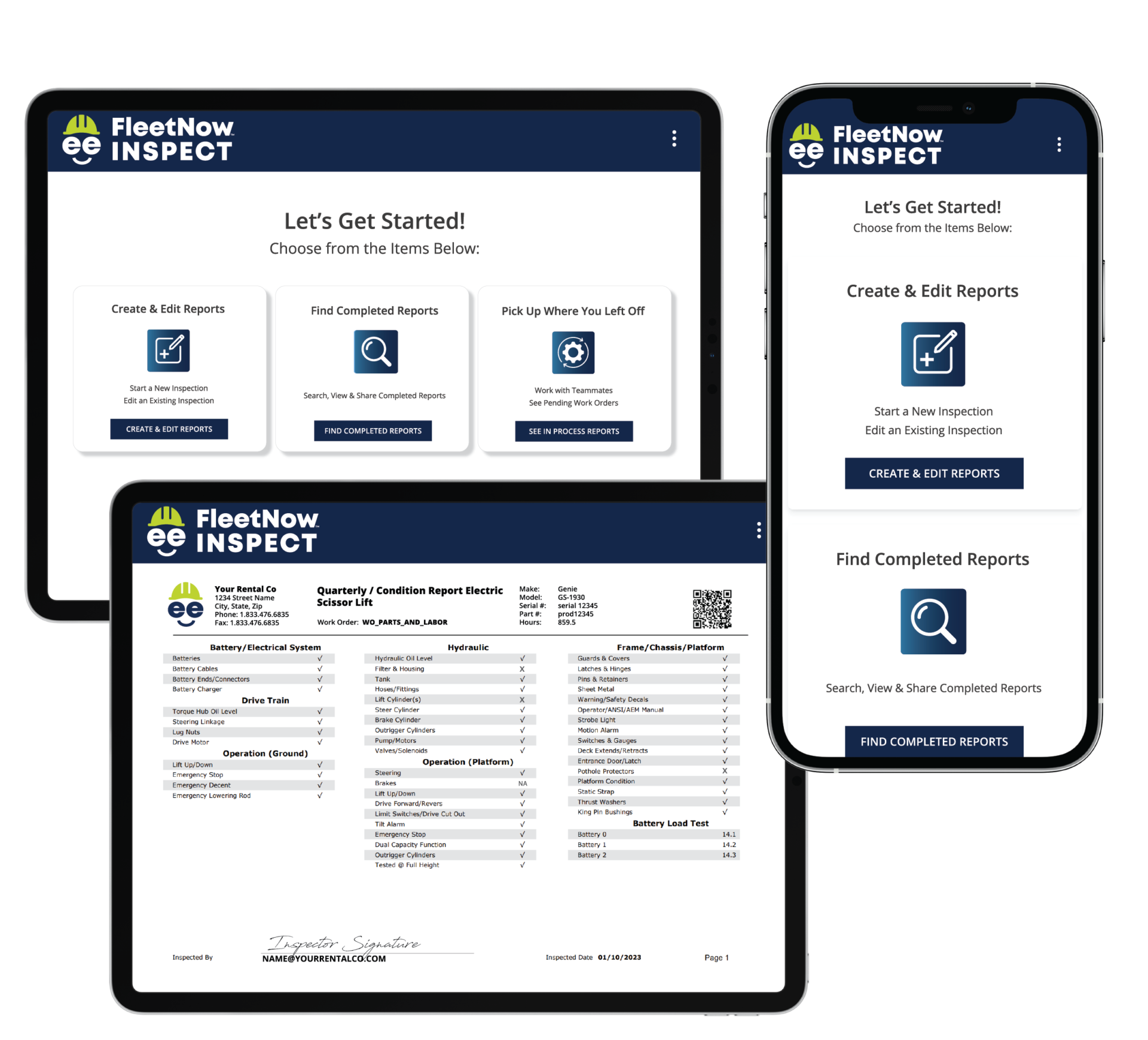
Keep inspections organized: FleetNow Inspect lets you complete pre-start and periodic inspections on a phone or tablet, in the shop or on site, with no paperwork.
Used Scissor Lift Prices
Here are used asking prices for common scissor lift models on FleetNow in October 2026. Prices depend on model year, hours, battery or engine condition and options.
| Model | Type | Platform height | FleetNow used prices |
|---|---|---|---|
| Genie GS-1930 | Electric slab | 19 ft | $3,300 to $6,000 |
| JLG 1930ES | Electric slab | 19 ft | $3,500 to $15,850 |
| Skyjack SJ3219 | Electric slab | 19 ft | $3,600 to $15,000 |
| Genie GS-2632 | Electric slab | 26 ft | $5,100 to $12,200 |
| Genie GS-3246 | Electric slab | 32 ft | $6,300 to $31,500 |
| Genie GS-2669 RT | Rough terrain | 26 ft | $13,700 to $30,600 |
| Genie GS-3369 RT | Rough terrain | 33 ft | $13,000 to $49,900 |
| Genie GS-5390 RT | Rough terrain | 53 ft | $19,900 to $59,900 |
More Scissor Lift Guides
Want to go deeper? These FleetNow guides cover specific topics and models:
- Scissor lift types and how to choose one
- How to buy a used scissor lift
- Used 19 ft scissor lifts: prices, specs and models
- Rough terrain scissor lift buyer’s guide
- Common electric scissor lift problems and fixes
- Skyjack SJ3219 specs, price and buying guide
- Genie GS-5390 RT specs, price and buying guide
- LGMG scissor lift models and specs
Shop Used Scissor Lifts With FleetNow
FleetNow lists used scissor lifts from dealers and rental companies across the country. Browse all used scissor lifts or rough terrain scissor lifts.
Need help finding the right machine? Contact the FleetNow team. Selling a scissor lift? List your equipment on FleetNow.


